


Storage is available now! We guarantee we'll beat any storage quote in Sydney.

Storage Available - We’ll Beat Any Quote!

Office Relocation in Sydney: The Planning Guide for a Move That Does Not Stop Your Business

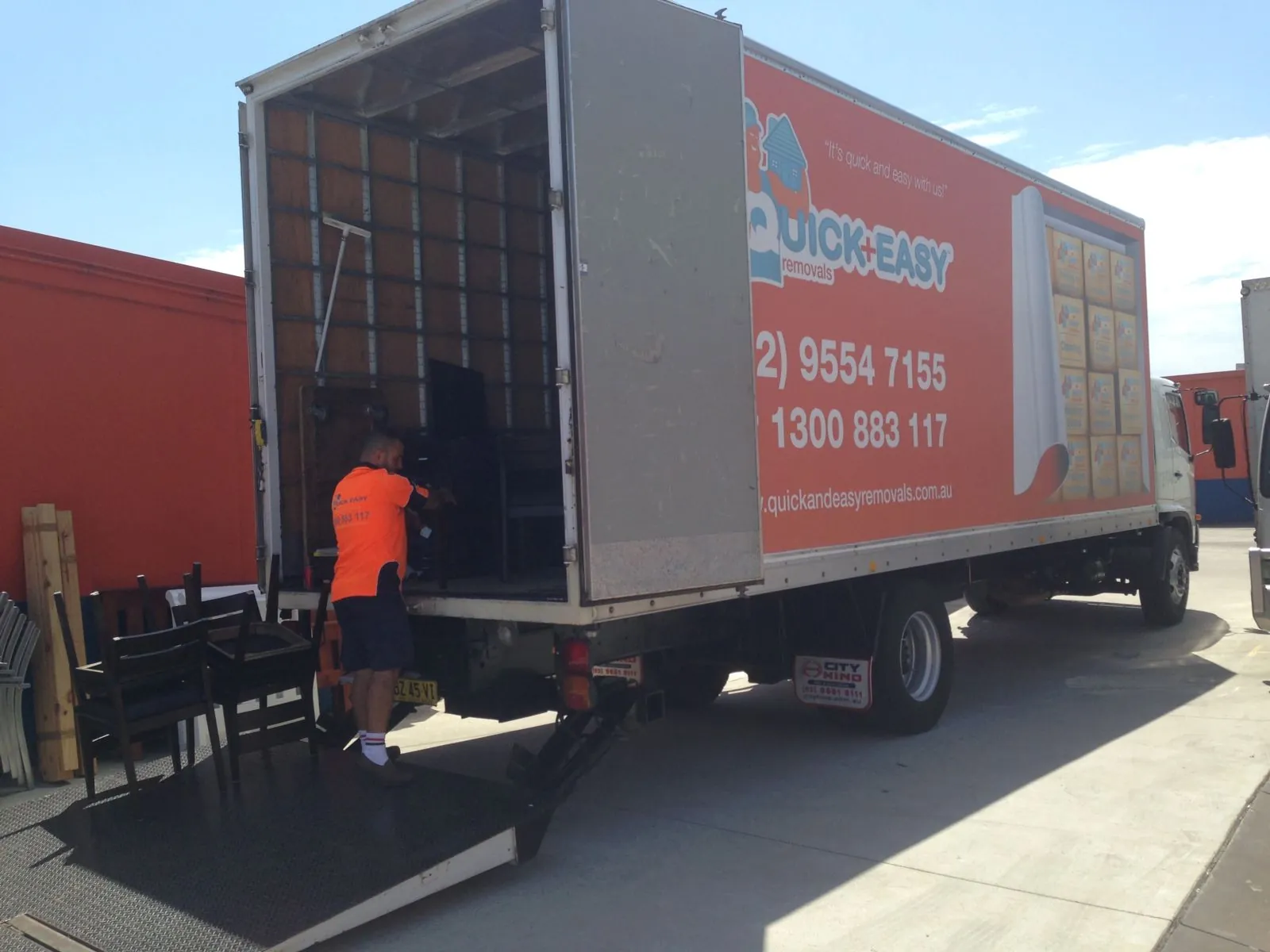
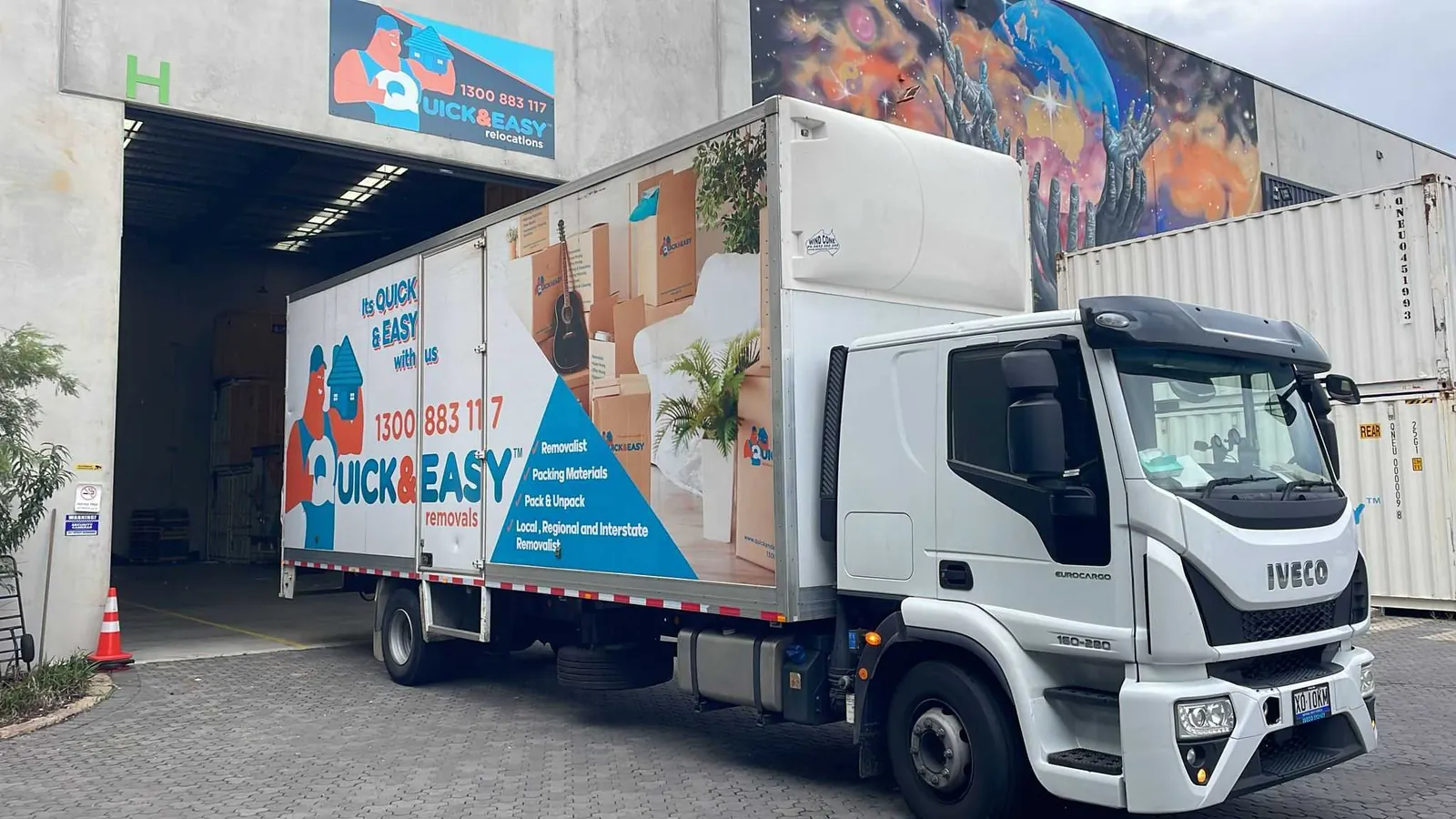
White Hino truck in the Quick and Easy Removals wrap parked side on outside the open depot roller door
One of our wrapped Hino trucks outside the depot before a job.

An office move in Sydney is a downtime problem before it is a furniture problem. Plan a Sydney office move about three months out for a floor of twenty to sixty people, and closer to six months with a server room, a fitout to build, or a make good obligation. An office relocation in Sydney is easier to absorb when it runs after hours or across a weekend, so staff sit down on Monday and keep working. Budget the downtime as carefully as the removal, because lost trading hours never come back. This guide is for the office manager, operations lead or owner holding the date. It runs the project in order, from lease dates and building approvals to the dock, IT, desks and the archive.

Quick & Easy Removals has been moving Sydney businesses and households for more than 20 years, AFRA accredited and fully insured. We run office removals after hours, overnight and on Sundays.

Start with the dates, not the boxes

Nothing can be booked until both lease dates are locked, which makes a business relocation a calendar problem first.

Lease dates, and why overlap is worth having

Negotiate a week of overlap between the two leases if the deal allows it, because it lets you cable the new floor before the first desk arrives. The outgoing notice period matters too, since it can fix the date on its own.

Make good on the outgoing space

Read the make good clause early and get it priced. Yours may ask you to strip cabling, remove partitions, patch walls or reinstate ceiling tiles, and each of those is a construction job with its own trades. Do not book it for the morning the removalists arrive.

Choosing the move window

Pick the window your access allows, then confirm it with both building managers.

Move windows for a Sydney office relocation
Move windowWhat it suitsWhat to watch
WeeknightSmall to mid floorsCheck when the dock and lifts close
Friday night to SundayMost moves, anything with ITAsk how early the weekend slots go
Staged over two weekendsLarge floors and phased fitoutsTwo sites live at once

More on timing in when to move office.

Your Sydney office relocation timeline

Work the stages backwards from your move date. The lists below are your office relocation checklist, and each stage assumes the one before it.

Three months out

Get removalists onto both sites instead of emailing a floor plan and hoping.

  • Confirm both lease dates and the make good scope
  • Set the budget and name who signs off spending
  • Book site visits and quote the move, fitout and strip out
  • Agree the new floor plan, and what is replaced

Two months out

This stage decides whether your date is real.

  • Book the loading dock and service lift at both buildings
  • Lodge certificates of currency with both building managers
  • Confirm after hours access, security passes and lift keys
  • Order internet and phone services at the new address

One month out

A labelling system agreed now saves hours on the night.

  • Number the new floor plan and label to those numbers
  • Order crates and moving boxes for the personal pack down
  • Purge and archive: old files to storage, the rest destroyed securely
  • Book IT for the decommission and reconnect, and brief staff

The final week

This week is confirmation and pack down, so keep anything new off the list.

  • Distribute crates and labels to every desk
  • Confirm the IT freeze time and back up everything
  • Walk both floors with the removal supervisor
  • Photograph the outgoing floor for the make good record

Move day and the first morning back

Keep someone from your side at each end with the building manager’s number. The crew unloads to the numbered plan, and IT starts once the furniture is placed.

The Sydney building requirements people forget

Office moves come apart here for reasons that have nothing to do with furniture. The rules belong to the building manager, so collect them by email at both addresses.

Aerial view of the Sydney CBD at golden hour with Sydney Tower and Darling Harbour in frame
Dock windows and clearways shape the schedule more than distance.

Loading dock bookings and height limits

Start by asking how the dock is booked at each address, whether it runs on timed slots, and what happens if a truck misses one. Take the height clearance in the same call, since it decides whether a large pantech fits.

Service lift bookings and lift protection

Check whether the goods lift has to be booked and who supplies the blankets and hard board that protect it. Get the dimensions on the booking sheet before you promise the boardroom table will fit.

After hours access and security passes

Find out what security at both ends needs for an evening or weekend move, and expect to supply crew names and vehicle registrations. Check whether the air conditioning runs after hours, because a January move without it is punishing.

Building manager sign off and certificates of currency

Ask each building manager whether the removalist’s certificates of currency have to be on file before approval, and how far ahead. Lodge them yourself and chase the reply, because a certificate in an inbox is not approval.

Street access, clearways and parking

If your Sydney office has no dock, the truck loads from the kerb, so check clearway times and apply for a works zone early.

Moving IT and communications

An office IT relocation can cost a week rather than a night, so give it its own sequence and test window.

What gets decommissioned, and by whom

Settle the split in writing: your IT team powers down, unplugs and labels, and you agree with your office equipment movers what they handle once the gear is boxed. Nobody pulls cables from a live rack. Ask your removalist whether racks should travel stripped and boxed as components instead of loaded. Photograph everything before it is unplugged and label every cable.

Internet, phones and the lead time that catches everyone out

Order the connection as soon as the lease is signed and get the install date in writing, because that timetable belongs to the provider. Confirm whether the floor already has a live service.

The order of operations so staff can log in on day one

Across a weekend the order that protects Monday is: freeze and back up Friday afternoon, decommission that evening, furniture and screens Saturday, reconnect and test IT Sunday, walk the floor before anyone sits down.

Desks, workstations and office furniture

Furniture is the bulk of the load, and a desk that lands in the wrong zone gets handled twice. The order is dismantle, label, carry, reassemble, keyed to a numbered plan.

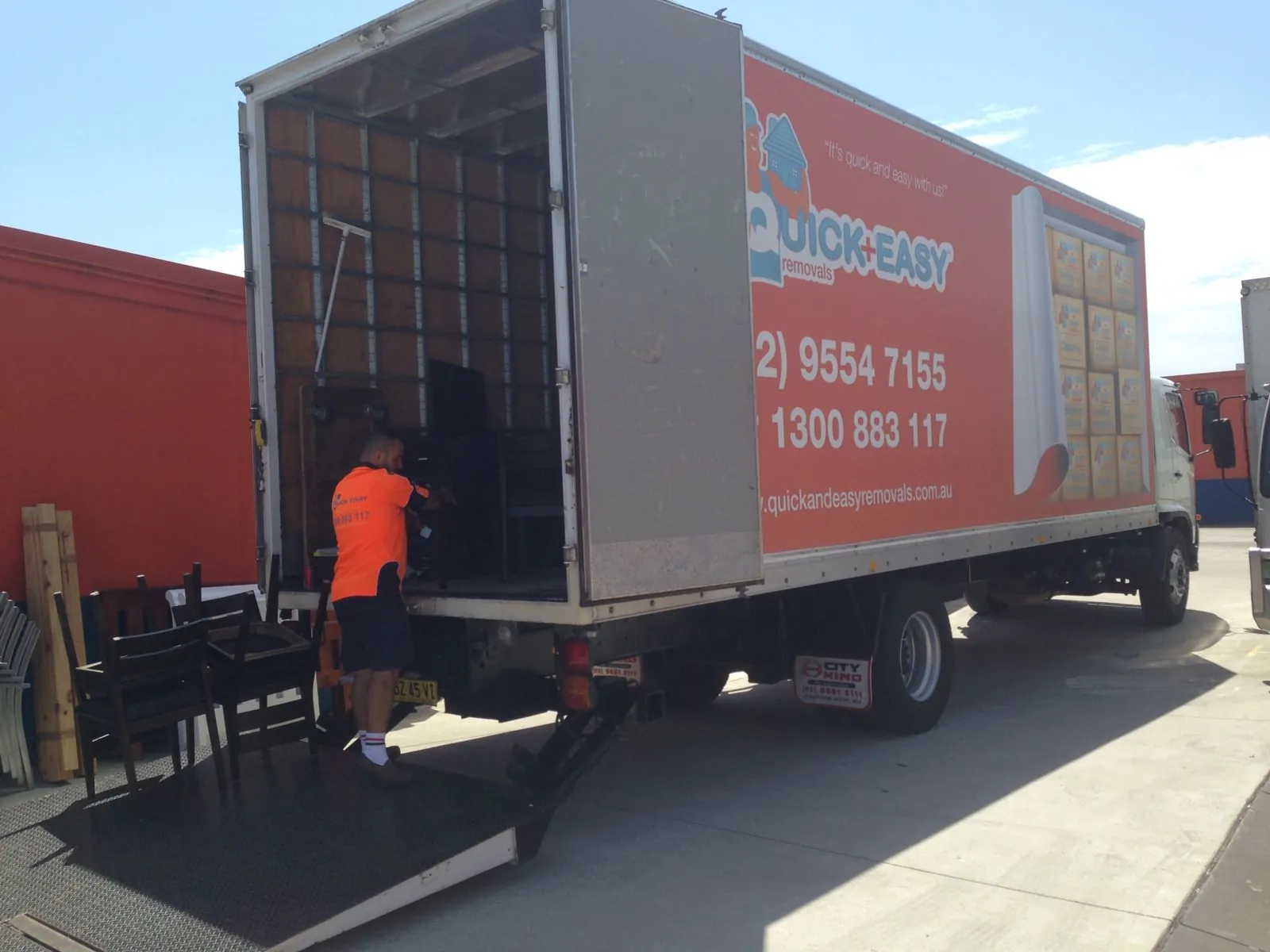
Removalist in a hi vis shirt loading chairs up the tail lift into the back of a Quick and Easy truck
Chairs going up the tail lift on an office job.

Dismantling, reassembly and the numbered plan

Bench systems, height adjustable desks and workstation screens come apart and go back together, and our office team does that at both ends, with fixings bagged and taped to the component. None of it helps unless the plan is numbered first, so number every desk, cabinet and meeting room, put that number on every label and crate, and tape a copy in the lift lobby.

Safes, boardroom tables and other heavy items

Flag safes, compactus units and boardroom tables when you ask for a quote, since they change the crew size and the equipment on the truck. The dock, the lift and the stairs set the constraint.

Furniture you are not taking

Leftover furniture becomes a make good problem the week the lease ends. Sell it, donate it, or book office furniture removal alongside the strip out. If the new floor has no room for something worth keeping, storage keeps the option open.

Files, archives and confidential material

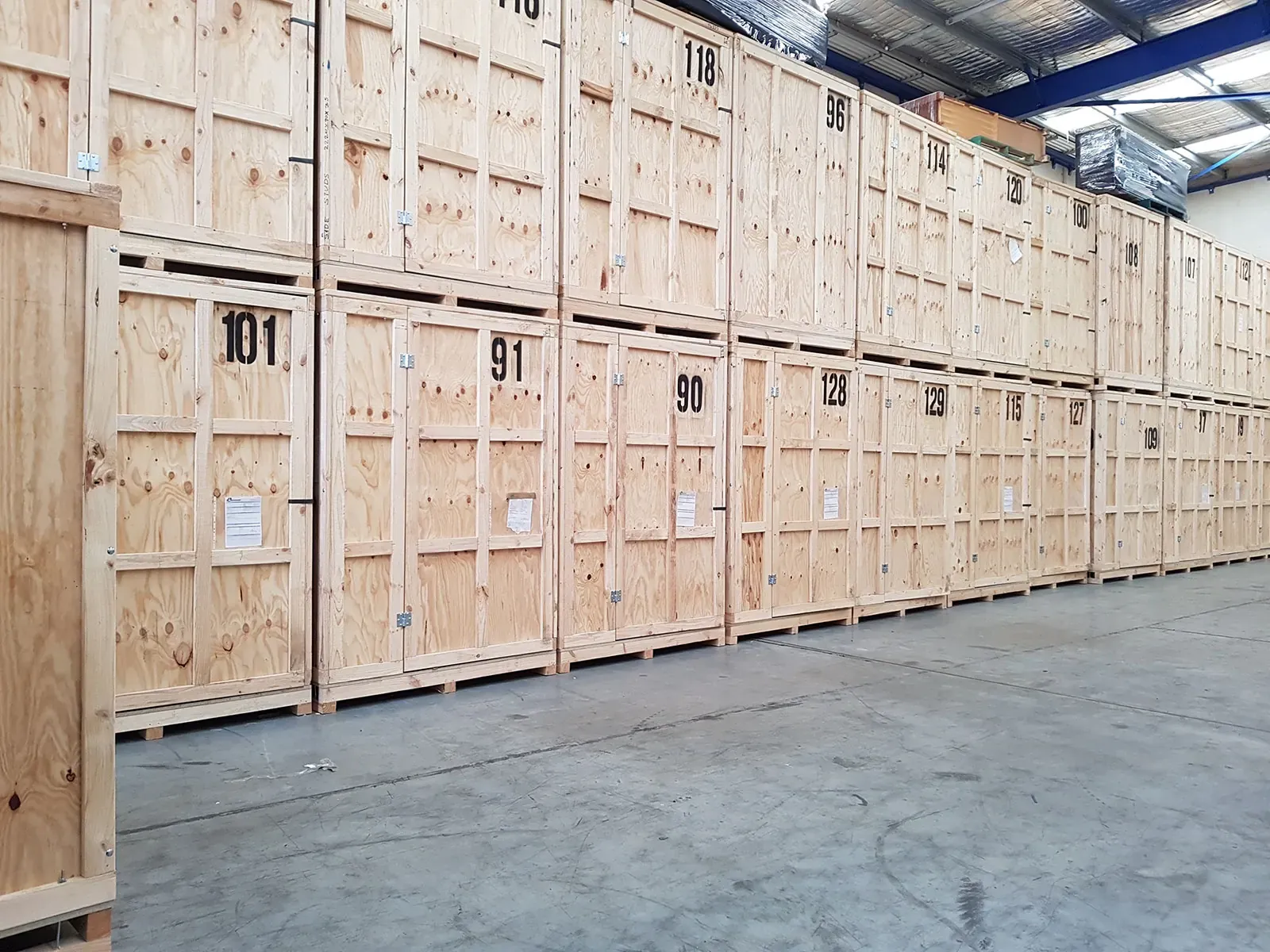
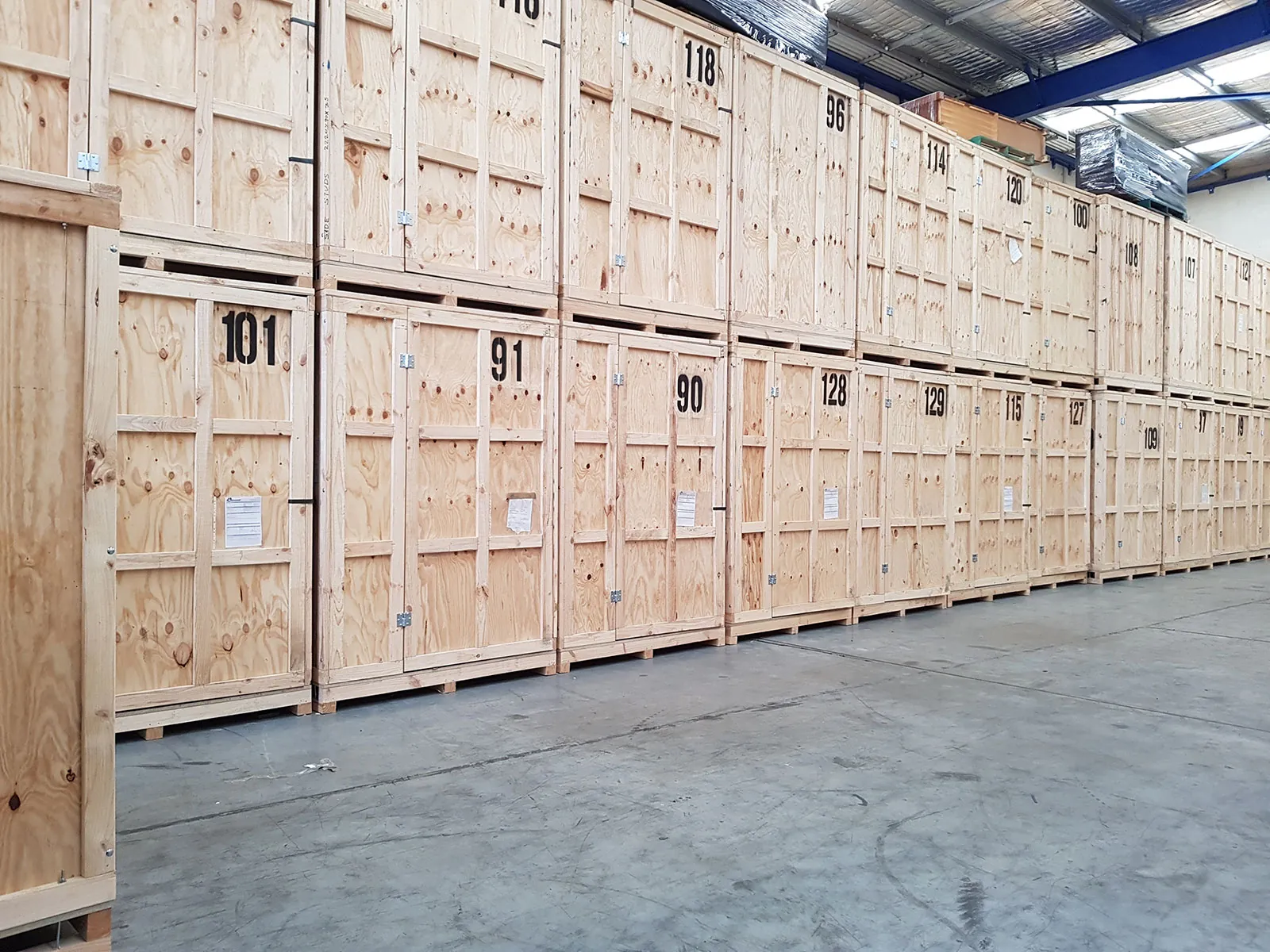
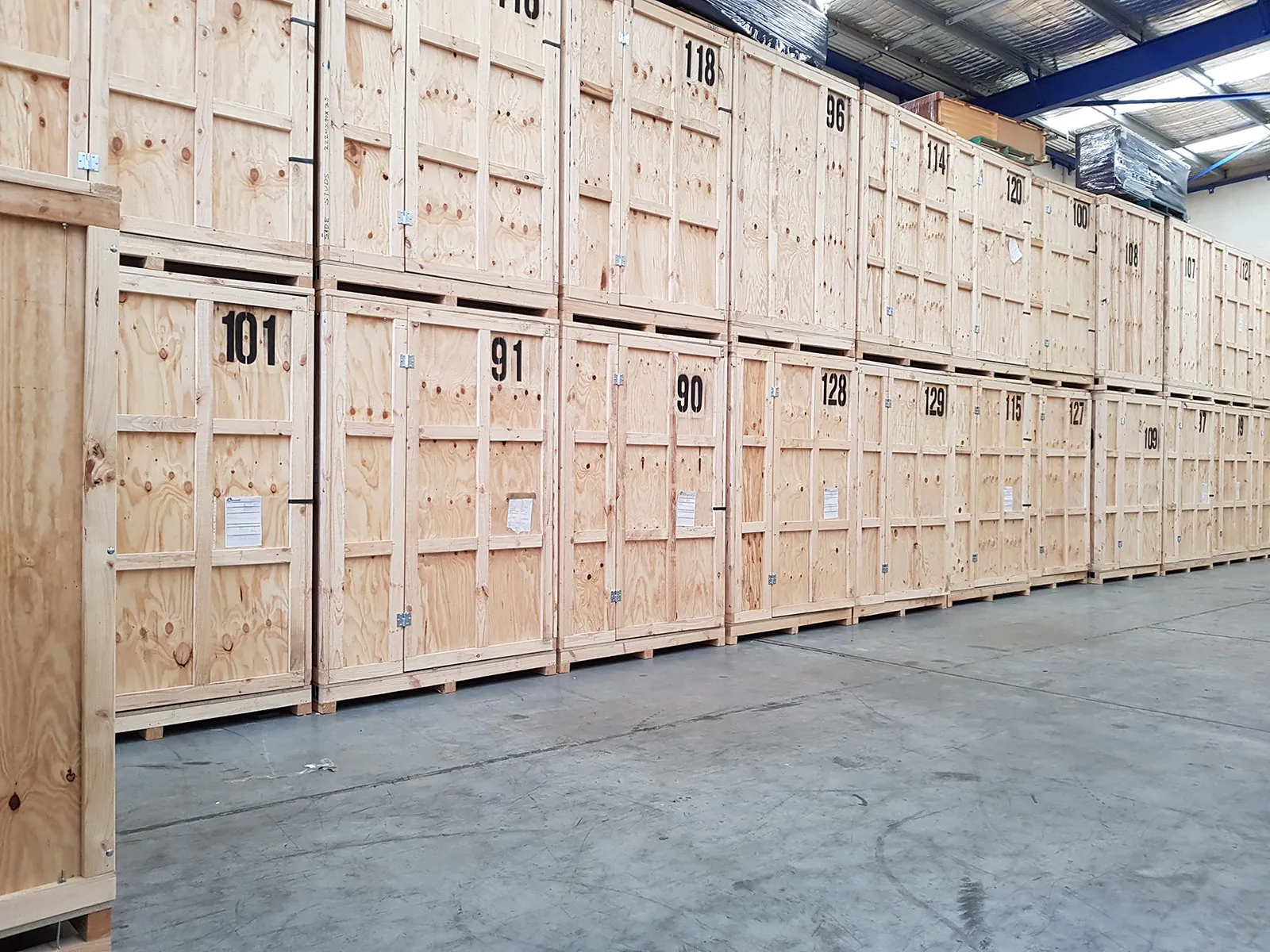
Row of numbered timber storage modules stacked two high inside the Quick and Easy storage warehouse
Archive boxes that skip the new floor go straight into storage.

The archive is the easiest part of an office move to do badly.

Sorting, sealing and chain of custody

Sort files into three piles, for the new floor, for storage, and for secure destruction. Records you are obliged to keep, such as client files and contracts, belong in the storage pile rather than the cull. Our office team packs and archives files, and boxes bound for storage go to our facility.

Seal, number and list every carton, and give one person the list to check off at both ends, so a missing box is noticed that night. Keep confidential cartons on their own trolley run. Book a destruction provider for the destroy pile and ask for certificates.

Keeping your team working

Staff decide whether the first morning back is productive or lost, so tell them the dates early and give them one name to call.

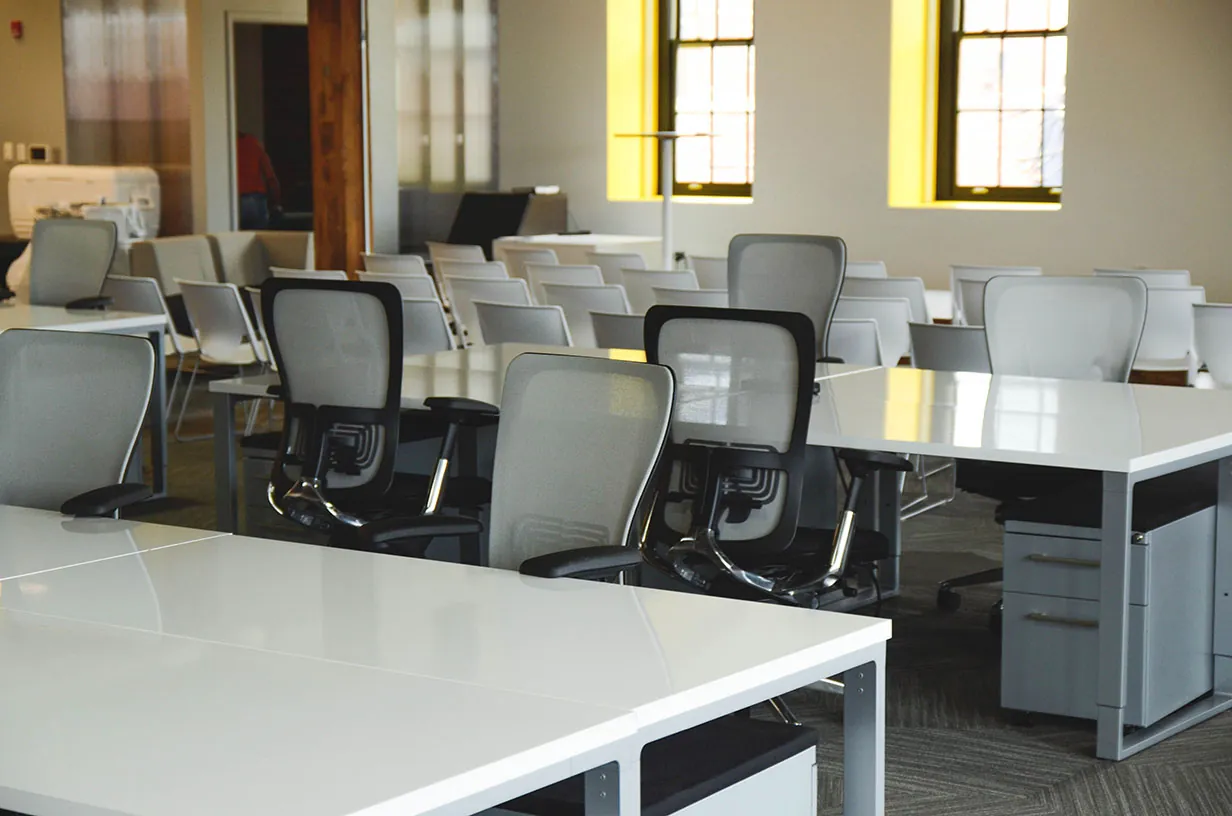
Empty open plan office with rows of white bench desks, mesh task chairs and pedestal drawers ready for a relocation
The new floor, before the numbered plan and the crates arrive.

Who owns what internally

Name one move lead with the authority to decide, then owners for IT, the building, staff and suppliers, all reachable on move night. One named decision maker keeps the job moving when plans change late on a Saturday.

What to tell staff, and when

Tell staff the date as soon as it is real, again a month out, and once more in the final week. They want four things: when they stop working, where they sit, what they pack, how they get in.

The personal pack down

Everyone packs their own desk into a numbered crate and takes valuables home. Hand out crates, labels and a moving office checklist that fits on one page. Staff moving house at the same time can use our packing and unpacking team, and packing fragile items covers the technique.

Updating the world about your new address

Work from a written list, and start with the entries that affect search and deliveries, so the Google Business Profile and map pin are fixed on day one.

  • Australian Business Register and ASIC records
  • Google Business Profile and the map pin
  • Website, email signatures and footers
  • Invoices, letterheads and standing deliveries
  • Insurers, banks, the accountant and the landlords
  • Clients, in a plain email

The failures worth planning against

Almost none of this list is about lifting. Check each item against your own move, confirm every booking, and make the building manager reply.

  • Approvals lodged and never confirmed
  • A dock or lift booked at one end only, stranding a loaded truck
  • Internet and phones ordered too late, so the floor is furnished and unusable
  • Labels that do not match the plan, turning Monday into another moving day
  • A make good scope nobody priced, arriving as an invoice weeks later

What a removalist needs to know to quote your office move accurately

Quotes for business relocation services in Sydney compare only when every one answers the same brief, so write it once and send the same copy to each of the office movers Sydney businesses shortlist. Ask every commercial removalists team how it prices access, volume and hours. The list below covers all three.

  • Headcount and workstation count
  • Floor plans for each address
  • Floor levels and lift dimensions
  • Dock rules and height clearance
  • IT inventory, and who decommissions it
  • Heavy items: safes, compactus units, boardroom tables
  • Archive volume, and what goes to storage
  • Your preferred move window

Run the numbers through the moving office calculator, then send the same detail to our office removals team with your free moving quote request. Mention it early if part of the business is going interstate, since our interstate removalists run weekly, and removalist costs in Sydney covers what moves a quote.

Office relocation Sydney: how access changes by district

Access is set by the building, not the postcode, so ask office removalists Sydney wide to quote after a site visit. For office movers in the Sydney CBD, start with dock windows and clearway times around The Rocks, while Pyrmont and Ultimo mix newer floors with tight streets. In the towers of North Sydney, St Leonards and Chatswood, ask how early the weekend lift slots go.

South of the city the stock changes. The warehouse conversions of Surry Hills look easy from the street and can still have one small goods lift. Alexandria runs to the same pattern on a bigger floor plate. Book a site visit with office removalists in Alexandria before you accept a quote. Mascot is business park stock, where the park sets its own rules.

West and north the pattern changes again. Parramatta is a second CBD. Check the towers around Parramatta Square for timed docks and booked lifts. Macquarie Park, north of the Harbour, is business park stock, so ask commercial movers in Sydney about truck access and after hours rules. The full list is on our removalists Sydney page.

Frequently asked questions

How far in advance should you plan an office relocation in Sydney?

Allow three months for an office of twenty to sixty people, and six months with a fitout, a server room, or a make good obligation. Lease terms, building approvals, dock bookings and internet lead times are what bind the date.

How long does an office move take?

Access at each end and the size of the floor set the timing. Ask for the job to be scheduled so furniture lands overnight and IT is reconnected and tested before staff return. Restricted dock access or a large floor pushes it across a weekend.

Do office moves have to happen after hours or on a weekend?

Not always. Ask the building manager at each address whether the goods lift and the dock can be used during business hours before you assume a weekday move works. Book the window the building allows, then plan the rest of the move around it.

Who books the loading dock and the service lift?

You do, as the tenant, through the building manager at each address. Make the booking about two months out, and ask the removalist what it has to cover, including the time slot, dock clearance and lift dimensions. Have the answer confirmed in writing.

Do removalists dismantle and reassemble office workstations?

Yes. Our office team dismantles desks, bench systems and workstation screens at the old address and reassembles them at the new one. Ask for it to be quoted with the move when you send your free moving quote request, and say if a system is still under warranty.

How do you move IT equipment without losing days of work?

Split the responsibility and fix the sequence. Your IT team powers down, unplugs and labels, and you agree with your removalist in writing what it handles once the equipment is boxed. Photograph racks before unplugging, label cables, and crate each desk’s screens.

What does a removalist need to know to quote an office relocation?

Headcount and desk count, floor plans, floor levels and lift access, dock rules and height clearance, your IT inventory, heavy items such as safes, and archive volume. Put that detail into the moving office calculator, then confirm it at a site visit.

Talk to us before you lock in the date

Three Quick and Easy crew members at the open rear of a loaded truck with trolleys and moving blankets, above the Quick and Easy removals and storage logo
Trolleys and moving blankets on an office job.

An office move is a project, and the office relocation specialists you hire should behave like project partners. Our office relocation services run after hours, overnight and on Sundays, so start with the moving office calculator, check our office removals page, send a free moving quote request, or call 1300 883 117.

How Much Do Removalists Cost in Sydney? The 9 Things That Change Your Price

Quick and Easy removal truck parked at the company depot roller door in Sydney
Truck size is matched to the job before a price is set.

Three removalists can quote the same Sydney move and come back with three different numbers, and it is almost never because one of them is greedy. Removalist costs in Sydney are set by the job, not by an average. A quote is a forecast of how long the job takes and what it needs, and it comes down to nine things you can check before you book: volume, access, parking, distance, how packed you are, packing help, cartons, special items, and when you move. This guide explains what drives the price rather than quoting a figure, because the cost of removalists Sydney wide moves with the home, the street and the day. An average from someone else’s move tells you nothing about yours.

We have moved people around Sydney for more than 20 years. The moving home calculator takes a few minutes, or ask us for a free moving quote.

How a Sydney removalist quote is put together

Local moves with us are charged by the hour. Ask any removalist when the clock starts and when it stops. Any quote worth comparing sits on a baseline. We hold AFRA accreditation, and we are fully insured.

What the quote covers

The hourly rate covers the crew, the truck sized to your job, trolleys, straps and blankets, and the work of loading, driving, unloading and placing your furniture. Shrink wrapping for mattresses is included when you book, and the crew carries boxes and other materials on the truck for the day. Do removalists dismantle furniture? Ask early about beds and flat pack units.

What is quoted separately

Packing, cartons bought ahead, storage and optional cover are priced on their own, and materials carried on the truck are not the same as cartons you pack into beforehand, so ask how each is treated.

What is usually in the move price, and what is usually quoted separately
Usually in the move priceUsually quoted separately
Crew, truck and equipmentFull packing or unpacking
Trolleys, straps and moving blanketsCartons and paper bought ahead
Shrink wrapping mattresses when you bookStorage between dates
Sizing the truck for one tripPianos, pool tables and other awkward items
Placing labelled cartons by roomOptional cover on declared items
Materials carried on the truck for the dayA call out covering travel time based on distance from the depot

Why a phone estimate and a real quote are different things

An estimate is only as good as the description we are given. Three bedrooms, ground floor, can mean a tidy townhouse, or a house with a packed double garage and an untouched loft.

The 9 things that change what your move costs

1. How much you are actually moving

How long does moving house take? That is a question about volume, and bedrooms are shorthand rather than a measurement. The garage, the shed and the storage cage are where the extra hours hide. Our largest truck takes a six bedroom home in one load and comes crewed, so ask what size truck and how many removalists your price covers.

Removalist loading a dark item into a branded orange Quick and Easy truck from the tail lift
Every trip between the door and the truck is time on the clock.

2. Access at both ends

A first floor terrace in the inner west, a narrow staircase, a tight turn at the top and a wardrobe that has to go up it. That is where a Sydney move stops matching the map, and three flights of stairs add hours to a job that looked small.

North shore driveways are often steep, curved or too tight for a large truck, so the crew parks on the street and carries up. Strata usually wants the service lift booked and padded inside a set window, and missing it means waiting.

3. Parking and the street itself

The only legal spot can be around the corner and past a set of steps, which costs more time than the stairs inside the flat. Inner west streets are often one way and parked out on both sides. Main roads run clearways, so the kerb is off limits at the hours you want it. City buildings need the dock booked, and some docks have a height limit that a large pantech, the box bodied removals truck, will not clear.

Many Sydney councils offer a temporary parking or works zone permit, but rules and lead times differ council to council, so check yours as soon as you have a date.

Three Quick and Easy crew members with trolleys and moving blankets at the open rear of a loaded truck
Wherever the truck parks, everything still travels between it and your door.

4. The distance between the two addresses

Distance matters, but in Sydney the kilometres matter less than the crossing. A run over the Harbour, or along Parramatta Road at the wrong hour, takes far longer than the map says. Getting the truck to you counts too, worked out as a call out from the distance between our Greenacre depot and your address. Our interstate removalists go out on a weekly schedule instead, with a sole use truck available.

5. How well packed you are when the crew arrives

This is the cost you can still do something about on the weekend before. Open cartons cannot be loaded safely, and untouched cupboards turn into a two person job by mid morning. If you are wondering how to prepare for movers, our packing tips for a successful move set out the order to work in.

6. Packing and unpacking services

If the packing will not be finished, decide before moving day who does the rest, because a crew packing on the morning is time on the clock. Packing and unpacking is done by a dedicated team, scoped to one room, the breakables only, or the whole house. Hanging clothes go into port a robes, and cartons are labelled by room.

Two members of the Quick and Easy packing team in branded aprons beside a large moving carton
Our packing team takes one room or the whole house.

7. Boxes and packing materials

Cartons are bought ahead, and the common mistake is buying too few. A kitchen swallows more than anyone expects, and a mid pack run for more moving boxes costs an afternoon. Tea chests take general goods, the crystal carton is deliberately small so the packed weight stays easy to carry, and picture cartons suit mirrors and glass tops.

8. Special and awkward items

Some things take longer, and a quote that ignores them will not survive the day. Upright piano removals are handled by our own team, though a piano still needs planning around stairs and doorways. Pool tables, oversized sofas, marble tops and fine art need protection and extra hands, and we cannot carry gas bottles or flammable liquids.

9. When you move

Dates change the job mainly through availability. Weekdays typically offer better availability than weekends and peak dates, and tend to be more cost effective, so flexibility is worth more here than anywhere else in a quote. Ask early which dates are still open, and hold yours as soon as a settlement or a lease start is confirmed.

Mid day start windows of 11:00 to 14:00 or 12:00 to 15:00 are offered on Sydney moves, so ask whether one suits your day. Our office is open Monday to Thursday 7:00 to 17:30 and Friday 7:00 to 17:00, so raise an unusual date on a working day rather than assuming the answer. Office removals can be run after hours, overnight or on a Sunday, so a business does not lose a trading day, and our guide to office relocation in Sydney covers the planning.

Storage between dates, and what it changes

Settlement gaps and overlapping leases are normal here, and they need not mean paying for two homes at once. Storage is modular. A module comes to your address for the crew to pack, then travels to the secure facility, then comes back and is unpacked at the other end. Modules start at 10 cubic metres, larger requirements go into the warehouse, and the facility has constant surveillance and restricted access. Modular storage is reachable day or night.

Rows of numbered timber storage modules stacked two high inside the Quick and Easy storage warehouse
Modular storage bridges a settlement gap.

Do removalists have insurance, and what is covered if something is damaged

Ask any removalist you are considering what cover they carry, what it leaves out, and whether they hold AFRA accreditation. Additional cover on your own goods is optional, and depends on what you declare. Restricted cover deals with the major events: fire, explosion, lightning, flood, collision and the vehicle overturning. Full cover picks up loss or damage during packing, loading and unloading, and accidental damage as well.

Whether removalists are liable for damage that happens on the day comes down to the cover in place, so read what you have before moving day. You can insure on a market value basis, which accounts for age, condition and wear, or on a replacement basis up to the value you declare.

Why two removalist quotes for the same move look nothing alike

What the cheaper quote has left out

If one quote comes in well under the others, ask both what truck size, crew size and materials the price assumes. Our five reasons why you should hire professional movers covers what the higher number buys.

Warning signs of an unrealistic quote

  • A firm price for a large home with no site check
  • Vague inclusions, or no answer if the job runs long
  • No AFRA accreditation and no clear answer on cover
  • Nothing in writing, only a number by phone
  • Pressure to pay in full up front

How to compare two quotes fairly

How to hire a removalist starts here. Put the two side by side and check six things.

  • Truck size and crew size, because they set the hours
  • Travel time, and how it is worked out
  • Materials, and which appear on an invoice later
  • Stairs and long carries, whether they are time or a fee
  • Insurance, and what applies as standard
  • Whether both were given the same description of your home

How to get a quote you can actually rely on

The information to have ready

  • Both addresses, and the floor at each end
  • Lift or stairs, and whether strata books the service lift
  • Where a truck can park, and any permit or dock booking
  • A rough room by room inventory, including garage and shed
  • Anything heavy, fragile, oversized, or needing dismantling
  • Your dates, their flexibility, and any packing or storage

Use the moving home calculator for a fast number

The moving home calculator is open day and night, weekends included. Work through it room by room with your inventory beside you rather than guessing from memory, and open the cupboards you have been avoiding.

Then book a proper quote

For a house, tricky access, or a storage gap in the middle, talk to a person. Call 1300 883 117 and we can go through the inventory, access and dates, or arrange an on site or virtual survey for a fixed price.

Removalist cost in Sydney, suburb by suburb

Search for removalist prices in Sydney, removalists Sydney cost, or what movers cost, and you get averages. What sets your number is the building and the street. In the inner west, terraces and narrow one way streets make parking and stairs the hard part of the day for removalists in Newtown and removalists in Marrickville. In the eastern suburbs, walk ups with no lift are common, and resident parking around Bondi Junction and Randwick makes the kerb the first problem.

North of the Harbour, removalists in Chatswood and North Sydney work around dock bookings and lift windows. Further north on the Northern Beaches, moves around Dee Why mix unit blocks with kerbside parking that fills early. Around Surry Hills and the CBD, building management wants the lift booked before the date is confirmed.

West and south, a job is more often a house with a driveway, so volume and the run from the depot count for more than stairs, though Parramatta and Hurstville both have towers. Every area sits on the removalists Sydney page, and our local removalists page explains how a Sydney job runs.

Aerial view of the Sydney city skyline and Darling Harbour with apartment towers in the foreground
Access and building rules change from suburb to suburb.

Frequently asked questions

How much do removalists cost in Sydney?

It depends on how much you are moving, how easy the access is at each address, parking, distance and your dates, so the useful answer is a quote rather than an average. Run your rooms through the moving home calculator and you have a number for your own move in a few minutes.

How much does it cost to move a house in Sydney?

Work out how much you should budget for a move from your own inventory, because no average removalist cost fits every home. Price the move on the moving home calculator, then add cartons and paper, cleaning at the old address, connections at the new one, and storage if your dates leave a gap. The truck is one line in your moving costs in Sydney.

How do removalists work out the price of a move?

For a local move we work out how long the job will take and what it needs: volume, the truck and crew to suit, access at both ends, parking, distance from our depot, and any special items. Interstate moves run to a weekly schedule instead.

Do removalists charge per hour in Sydney?

Local Sydney moves with us are charged per hour, and the rate covers the crew, the truck and the equipment they bring. Ask what crew and truck size the rate buys, how travel time is handled, and what applies if the job runs longer than the estimate.

Why is one removalist quote so much higher than another for the same move?

Usually because they are not covering the same work. One may include a larger truck, a third removalist, materials or travel time the other leaves out, or treat stairs differently. Go through the inclusions line by line.

Do removalists charge extra for stairs or a long walk to the truck?

On a local move with us they are not a separate fee, but they make the job take longer, and the time is what you pay for. On a fixed price they are priced in beforehand and raised before moving day rather than on it. Booking a service lift or a parking permit early keeps the hours down.

Does packing myself make the move cheaper?

Yes, if the packing is genuinely finished before the truck arrives. Sealed, labelled cartons load quickly and safely. Half packed rooms do the opposite, because the crew ends up packing on the clock. If you will not finish, book our packing team for the kitchen.

Are removalists insured if something is damaged?

Quick & Easy Removals is AFRA accredited and fully insured, and you can take additional cover on your own goods. Restricted cover handles major events such as fire, flood and collision. Full cover extends to damage while goods are packed, loaded and unloaded, plus accidental damage, and storage cover is separate. Say what you want covered when you ask for a free moving quote.

Get a number you can plan around

What a removalist costs in Sydney comes down to the job, and a real quote takes minutes. Quick & Easy Removals has moved Sydney homes for more than 20 years, AFRA accredited and fully insured. Call 1300 883 117 or request your free moving quote.

How To Help Your Dog Settle Into A New House

So you’re about to move house. You have set the date, organised the removalists, started the ordeal of packing but have you considered your furry friends? While dogs usually move and settle better than cats, it’s worth taking the time to ensure your furry friend is comfortable and at ease with their new house. These are some great steps to ensure it’s a smooth move for everyone.

Organise a moving day playdate

Getting a family member or friend to look after your dog on moving day will allow you to move safely (no falling over the dog) and keep your dog calm. Ideally keep your dog at their house until the house is somewhat settled. Having the familiar furniture and dog toys in place before they arrive will allow them to understand that this is their belongings but in a new location. It will come as less of a shock. 

Take them outside ASAP

As soon as your furry friend arrives at their new house, take them outside. Show them where you want them to go to the toilet and set expectations on how to behave in their new home. Treat toilet time as you would with a puppy, lots of encouragement and rewards when they do the right thing. 

Pack their items last and unpack them first

Ensure that your dogs favourite belongings and toys are around until it’s time to leave and as soon as they are in the new home. Seeing their belongings and toys in the new house will help them settle and understand that this is their place too. 

Take them for a walk around the neighbourhood 

Once everything is in place at the new house, take your pooch for a walk around the neighbourhood. Show them the local streets, introduce them to the new smells and help them understand the area they are now living in. 

Make sure your new house is safe

It is very important to ensure the new house is safe and ready for your furry friend. Check fencing and gates to see if they will be secure for you pooch. Check the shed, garage and shelves at nose level for any poisons and remove any chewable items. It may be worth completing a sweep of the garden to ensure no hazardous substances have been spread that you are unaware of. 

Keep your normal schedule 

Try to keep your dog’s schedule as normal as possible. Take them on their walks, feed them at their usual time, engage with play and place them in a similar environment at night. Keeping everything as normal as you can will help to settle them more quickly into their new environment. 

Be there for them

If possible arrange to be home for the first week. By being there you can help them become familiar with their environment and ensure they don’t engage in any destructive behaviours or try to flee. You can also observe how they are acting in their new space. If staying at home for the week isn’t possible, have someone drop in and check on them when they can. 

Be patient

Introducing your dog to a new environment is a bit like having a puppy again. Training may go out the window and your pooch may engage in behaviours that they were not doing before. Go back to the basics and be patient, settling may take a while but with the right encouragement they will grow to love their new home as much as their last. 

Are you moving house soon and need a reliable removalist company? Quick and Easy are here to help! Give us a call today for your free quote. 

Five Reasons Why You Should Hire professional Movers

Your moving day is set and you begin to plan for the big day. One aspect to consider is, should you hire a professional mover? While it may seem to cost more, the time and stress saved is worth every cent. Here are our top five reasons why you should hire a professional mover.

Peace of mind

Our lives are already stressful and busy with the everyday events of life, why give yourself more stress when it comes to moving? Hiring professional movers allows you to take a step back while the professionals deal with all the stressful things such as fitting oddly shaped items into one box and working out how the oversized couch is going to fit through your tiny front door.

Save money

While it may seem more expensive to hire professional movers, ultimately it will save you money overall. Professional movers come with everything you need to move your furniture plus the right size truck to move it all. Saving you money by doing one trip only and having the right tools for the job.

Avoid injuries

Hiring professional movies guarantees your safety while moving house. Maneuvering large, heavy and odd shaped items through small spaces can lead to injuries unless done professionally. Leave the heavy lifting to the professionals who are taught how to handle tricky moves so you all stay injury free.

Save time

Professional movers are fast and efficient allowing your house to be packed up quickly so you can spend more time organising your new home. While the professionals are busy moving all your items, you can spend your precious time doing those activities around the house, speeding up the whole process. Save even more time and hire a packing service too.

Better handling

Professional movers have been trained to move objects through tricky situations. Unfortunately accidents do happen but if you are using a professional moving service, any breakages the removalist cause will be covered. Choosing to move items yourself may result in more breakages with no one but yourself to cover the damage bill.

Are you looking for a professional moving service? Contact us today for your free quote!

How To Move House During Winter

Winter is fast approaching and with it comes the rain and colder days. Winter can be the perfect time to move house but with it comes challenges that need to be planned for in advance. Read our top tips on how to move house successfully during winter.

Consider your choice of box

Cardboard boxes are the norm for moving house. They are easy to stack, pack, dismantle and dispose of once the move is over. But, cardboard boxes have one big weakness. When it rains they get wet and as such they lose their shape and the ability to store your items safely. To overcome this issue, if you are planning to move during winter, when rainfall is higher, check to make sure you are moving on a dry day. If you are locked into a day and the forecast is indicating rain, consider using plastic tubs to protect your items and when cardboard boxes are needed, ensure they are kept as dry as possible.

Move safely

When moving it’s always a good idea to protect your floors from being damaged. Often plastic sheets are a great option as they are readily available, easy to clean and dispose of. In winter however, it may be a good idea to use another form of protection such as old sheets. Plastic can become a hazard in wet conditions, where falls and slips become more likely so a material would be a more suitable and safe option.

Wear appropriate clothing

Ensure you are wearing comfortable clothes that will allow you to move unrestricted throughout the day.  Layers will be the most sensible option as you may get warm moving furniture but need an extra layer once you’re outside. People often forget to leave a moving outfit out when packing up their clothes, so make sure you plan your outfit in advance and keep it seperate. Don’t forget about your footwear too! Choose a pair of comfy, non-slip footwear that will keep your feet dry, warm and safe.

While moving during winter may have it’s setbacks, it is often one of the quieter moving months resulting in lower moving costs and great availability with removalist companies.

Looking to move house this winter? Call us today for your free quote!  

How to Pack a Bathroom

How To Pack A Bathroom

While the bathroom is generally the smallest room in the house, it can contain a whole lot of products, products that aren’t easily packed. It’s important to also consider what you may need to keep while moving and what can be packed up early. Additionally moving is the perfect time to throw out any unused, old and expired products so start the process early to give yourself plenty of time. Furthermore, moving can be expensive so it may be worth cutting down the amount of boxes you use by throwing out inexpensive items that take up valuable space.

Organise your products into three piles.

Start by going through all your products splitting them into three piles; throw, pack and keep out.

The throw pile will include anything that is no longer necessary. Throw out anything that is expired, empty or hasn’t and probably won’t be used.

Pack includes any items that you are intending to keep and don’t need between packing day and moving day. Consider throwing out any products that haven’t been used in a while plus any old duplicates.

Keep out is the last pile and will include any items you require leading up to the move. Keep a wash bag handy so you can pack up the final few items on moving day and place them straight into your new bathroom.

Consider donating unopened items.

How many mascara tubes have you been gifted in showbags and just never used? If products are still sealed or in their original packaging, consider donating the items to a charity so someone else can use them. Research charities in your area that take unused toiletries and cosmetics and check if your items are eligible.

Pack your items correctly.

The bathroom can be tricky to pack. In particular, pay close attention to items that can leak or spill onto your other products.

Start by checking all lids and seals on bottles, ensuring they close and remain closed to prevent spills. Consider taping closed any risky bottles or place them in a ziplock bag separately before boxing them up.

Use small boxes when moving bathroom items. Often products are small and by using the wrong sized box it will end up with a disorganised and messy. Ideally group products so when it comes to unpacking it will be an easier process. If there is room at the top of the box, pack a towel or two to protect the products and ensure they don’t fly around during the move.

Are you moving house soon? Quick and Easy provide an array of moving services that will suit your moving needs. Give us a call today to receive your free personalised quote.

Unpacking Tips

Why unpacking is just as important as packing. And what you should be doing before and after you move.

Unpacking is often an overlooked step in the moving progress. You’ll be bombarded by hundreds of packing tips, but people forget that unpacking is just as important.

By the stage you have found your new place, packed everything carefully and bundled the kids and two dogs into the car, unpacking should be a breeze, right? While unpacking can be an easier task, often it is stressful and causes a new kind of living as you spend the next few months living out of a box. So, to avoid another moving stress, follow our steps below so you can be organised for your next move.

What to do before you move:

Take photos of areas in your current house that you love.

This could be your bookshelves, desk area or tool shed. Taking photos will allow you to replicate the same arrangement in your new home, saving you time and frustration. Additionally, take photos of the back of your TV and any other electronic devices so you know exactly what is plugged in where.

Strategically pack your boxes and label them accordingly.

Try to pack items that only belong in the same room. By keeping rooms separate, boxes can be placed into their applicable areas and easily organised in their new location. Ensure the box is also labelled with the room. Some may choose to take it a step further and write a list of items packed into the box but ensure however you label your boxes that they are clear not just to you but the removalists helping you move.

Pack a essentials box.

This box will contain anything you require on your first night. Moving can be a long process, so have your necessities handy for when you need them. These may include a change of clothes, toiletries, electronic chargers and any utensils and food items. Make sure this box is well labelled and travels with you on moving day.

What to do when you have finished moving:

Clean your new house.

Often houses are sold and rented out with a basic clean. With the busyness of moving, it can be hard to find time to deep clean your home before moving day, but it is an important step. If you have time, hire some carpet steamers so you can deeply clean the carpet a few days before moving day, ensure you leave time for the carpet to dry. Pay particular attention to surfaces often touched such as door handles and light switches, which are often overlooked in the cleaning process. If time is tight, at least give your floors a vacuum before moving any furniture in.

Clean your furniture.

Moving provides the perfect time to clean those items we often forget about. Moving dirty furniture into a clean house doesn’t make sense so make sure you spend some time thoroughly cleaning your furniture. Items to pay particular attention to includes, the fridge, washing machine, dryer and dishwasher. Now would be an excellent time to also hire a professional cleaner for your coach or fabric bedhead.

Move boxes straight into their applicable rooms.

People would argue that it is easier to quickly move all the boxes and furniture into the one room and then sort out where they go. While this approach may help you unload quicker it will slow down your moving process. Instead, place each box in the room it belongs to so when it comes time to unpack you can see what goes where and you don’t have to spend time moving items from one room to the next. If you have people helping you move, it may be best to follow a colour-coded box system where each box is labelled with a colour that matches a colour on a door in your new place. All the helper needs to do is match the box with a marker on the door, making it easier for people not familiar with your house to correctly place your boxes.

Unpack rooms by importance.

Decide which rooms will most likely be used first and unpack those ones first. People tend to start with the bedroom as after a long day moving, you’ll likely be exhausted and wanting to crash early. Ensure that when you do unpack that you unpack the whole room before moving onto the next. This ensures boxes with non-essentials are unpacked quickly and not left around for months later.

Planning a move soon? Quick and Easy are here for you, call us for your free quote today!

What Is Backloading And Why Is It Cheaper?

You’ve heard a removalist company mention backloading and how it can save you money when moving, but what exactly is backloading and why is it cheaper?

Backloading is a term you will probably come across when looking for removalists, but people are often confused as to what it is and sceptical because of its cheaper cost. Backloading is simply when a removalist company fills a truck that is heading back from a job. So instead of sending an empty truck from Sydney to Melbourne, the removalist company will fill it with another move.

The advantage of backloading is that because you only pay for the space your items take up, you will save money compared to a full-service offering. Additionally, companies would prefer the truck to have something in it rather than nothing, resulting in great discounts for the customer. Trips can also generally be arranged with shorter notice than a full service offering as the truck is already in that location.

The disadvantages of backloading is that it can be less flexible and take longer. Because you’re sharing the truck with other movers, you won’t get to dictate the exact time the truck will pick-up and drop off your items. Additionally, trucks are more likely to run behind schedule as you are relying on other people to be prompt and fill up the truck with their items by a certain point. Backloading services also won’t appeal to movers who want help packing or don’t want to share a truck with others, so a full-service offering may be the way to go.

Backloading can be a brilliant way to save money while moving, while it isn’t for everyone, it may be the best option for your next move.

Quick and Easy offer backloading services, give us a call today for your free quote!

Struggling to fit your furniture through the doorways?

Follow these steps

Prepare

Preparation is key to avoid any nasty surprises come moving day. It may sound like a simple thing, but majority of movers skip this step and end up paying for it. Any furniture that is large should be measured. This will allow you to plan ahead and ensure you have the man power it will take to get the furniture out. Three main measurements should be taken including:

  • Height: measure from the floor until the highest point. This includes any legs or feet.
  • Width: measure the widest point
  • Depth: for a couch this would involves measuring from the front to the back of the couch

Measure your space

Once you know the dimensions of your furniture it is time to measure the area you are transporting them through. This may include door frames, hallways, stairwells and other small spaces. Measuring is fairly straight forward with the height and width recorded.

Try different angles

If you have begun to move your furniture and find it is not fitting through door frames, try moving the piece of furniture differently. This could mean angling or standing it on it’s back or side. Couches for example can be stood up on one side, placed on a piece of cardboard and either pushed or pulled through the door frame.

Take it apart

If your furniture is a flat pack brand, consider dismantling it before moving it. This will not only make it easier to carry out of your home, but it will also save you space in the van. Other things to consider are removing legs and feet off couches. Those few centimetres can be all is needed to allow your couch to move through a door-way.

Remove the door

If you are still struggling to fit your furniture through a door-way, consider taking the door off completely. This can easily be done by removing the door from it’s hinges and then placing it back once the move is over. Additionally, if you are really stuck, the doorframe can be removed. This needs to be thought through carefully and done only when you know what you are doing to avoid damage.

Call in the professionals

Sometimes you just need that extra hand from the experienced removalists. Removalists have many years of experience manoeuvring furniture through awkward situations. We have the machinery and man-power needed for those tricky moves. Hoisting through a balcony or window could be a solution to your sticky situation but should only be undertaken by a professional.

Need help with that awkward couch or table? Quick and Easy can help! Call us today for your free quote.

How to move your plants safely

Plants are as fragile as antiques and moving them incorrectly can cause them to become damaged. But plants are also part of the family, they brighten your house and make it more welcoming. It’s important though to consider which plants you will take, and which ones will be safer to be left behind.

Consider prepping your plants before the move

When preparing your plants for moving day consider giving them a prune, removing any dead leaves, pests and weeds. Consider re-potting plants into lighter plastic pots so they are easier to carry.

Research before moving

If you’re moving interstate or overseas check that your plants will be allowed. Sometimes other states and countries will not allow certain species, so always be sure to check before bringing them in. Also check that the removalist company you have chosen allows plants in their trucks. Many companies do not transport plants due to their delicate nature. If this is the case, consider shipping the plant or bringing it in your car with you. Additionally, consider the possibility of leaving your plant behind. Sometimes it can be cheaper and easier to start fresh in your new home.

Move them yourself

If you don’t want to rely on the moving company or shipping them separately isn’t an option, consider moving your plants yourself. Plants are relatively easy to move, as long as you’re prepared, and you treat them like you would a pet, with care. Simply place your pot into some sturdy boxes, stuffing the empty space with paper or bubble wrap. If you’re traveling long distance and spending the night on the road, ensure you bring your plants inside especially in hot or cold temperatures as this can damage fragile plants. Taller plants can be placed on the floor while smaller ones can be placed on the back seat. Ensure you check on them regularly to minimise damage.

How to move outside plants

Outdoor plants can be shipped or transported with you if they are small. If moving an outdoor plant is not an option, consider taking some clippings, so you can plant them in your new garden. Simply place the cutting into some water to ensure it survives the move.

Caring for your plants post move

Moving can be stressful on plants so ensure you are giving them the best start possible in your new house. If you relocated the plants to plastic pots, leave them for at least a week so it can be used to it’s new environment before re-potting. If you’re re-planting outside consider the difference in soils, sunlight and temperature. When you have placed your plant into it’s new environment ensure you give it plenty of water and plant food.

Book Your Move